Candy Moths
An open make-your-own species.
Overview
Candy Moths are small creatures about the size of a small dog that have a worm tail and look like candy. They are usually fluffy, with a body that looks like the first treat they ate. They all usually look very different from one another, as their offspring do not have to look like them. The worm tail and the moth are two separate beings, with the worm tail being a ruler over the moth.
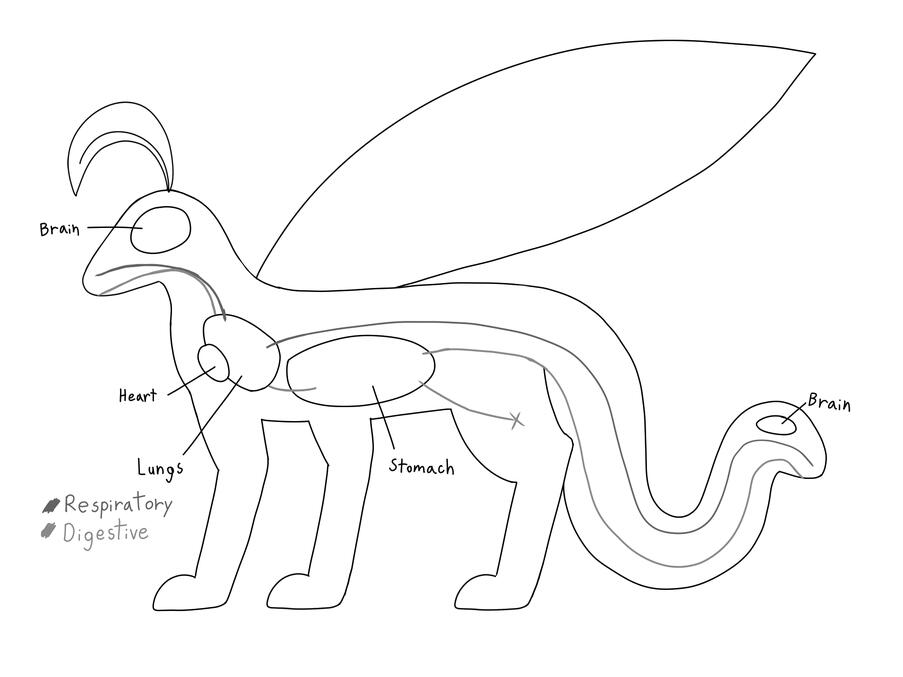
The tail is the part of the moth that controls fight, flight, and freeze. It is very focused on the preservation of the moth, as the moment the moth dies, they die as well. This does not go the other way though, as the tail can die without the moth dying. In this case, the moth gains the ability to think for themself and is much more calm and extrovertive, but loses their sense of self-preservation, meaning that they are not as worried about predators or what can and can't harm them.Both the tail and the moth have a mouth with a shared digestive system, although the tail eats much more often than the moth in order for the moth to keep track of their surroundings. Even though they are essentially the same creature, the tail thinks and acts "separately" to the moth.Candy Moths are not considered smart creatures even though they have the same brain power of a dog due to them using most of their brain power to check their surroundings rather than interact with other animals and solve problems. This causes them to act more like your average lizard than your family dog.
These creatures live in a variety of places except for hot or barren habitats. They most commonly live in forested mountains or snowy plains, as their tail prefers the cold. Candy Moths usually stay away from other species, as they are classified as prey. Their predators consist of essentially anything that is big enough (and stupid enough) to eat them. Because of this, it is very rare to see one in the wild, but it is known that some isolated people have them as pets.Unlike most exotic creatures, Candy Moths are one hundred percent legal to own in most countries with the required permits.
Candy Moths can typically be treated as your average pet in terms of medical care and training. If your Candy Moth is living with children or is in a household of more than 3 people, it is generally recommended to get their tail stuffed. If you do not want to stuff the tail, keeping the tail as warm as possible will keep it calm and docile.They can eat sweet human food, but they mostly only consume it once in their life, in which they use it to create a toxic poison based on the chemicals the treat is made from. This is usually the only time a human will see them, as they search towns for food. After a Candy Moth eats their desired sweet, they will become very sick and groggy for 2-4 weeks while their body concocts a highly dangerous toxin and injects it into their blood, making any creature regret even biting them. Their main diet afterwards consists of berries, acorns, mushrooms, and in some cases algae.
Candy Moths start out as a blank creature; stick-like antenna, smooth tail, and a gray-tone palette. When a Candy Moth eats their desired candy, they shift their bodies to match the colors of the treat they just ate. These colors signify that they are poisonous, causing other creatures not to eat them.The different parts of a moth that they gain after this transformation are called traits. Some traits are more rare than others, and are usually very random. A candy moth does not need one of their parents to have a certain trait in order to receive it, but isn't uncommon for them to inherit traits from their parents. The reasoning behind this is unknown, as traits are not genetic or environment-based.
Candy Moths are an off-breed of butterflies. Instead of their body creating a small natural toxin like other butterflies such as monarchs do, they have evolved to use the toxicity of already toxic foods. Natural selection has led these creatures to have an instinct to eat human sweets, as those already contain many things that are dangerous to other creatures.
Because of their ancestry and habits, they are classified as moths.
Reference Information
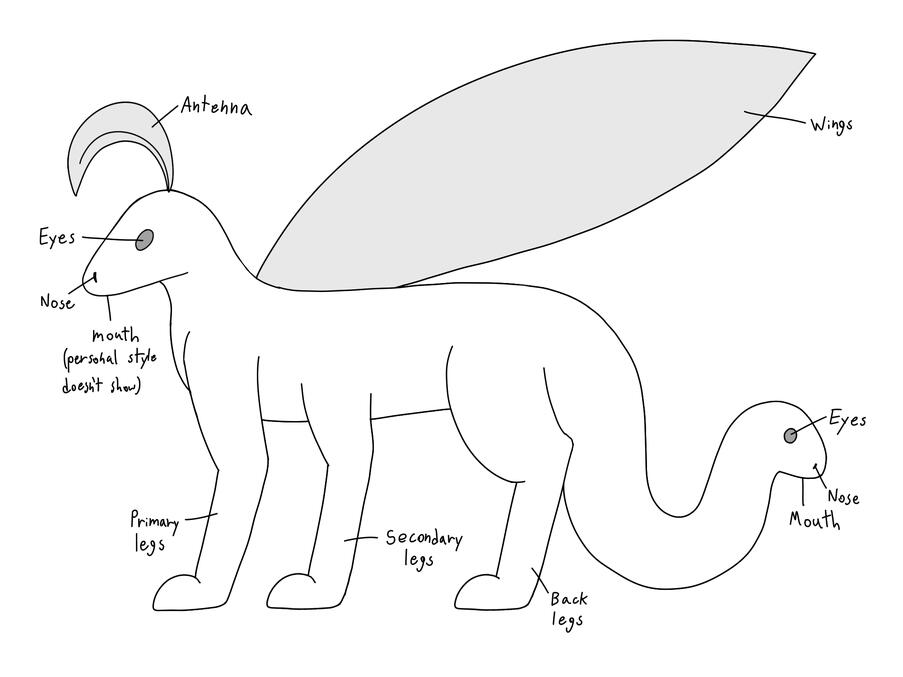
Candy Moths are made up of six main parts, being the head, antennae, legs, body, tail, and wings. A Candy Moth can vary in size, shape, color, and traits, but no matter what these traits will always be a part of them. Candy Moths use their antennae to sense vibrations in the air, meaning they always have a good sense of what is around them, from a bug jumping on a flower petal to a tree falling down. Their antennas work in a mile radius, meaning that they require most of their brain in order to keep track of all the vibrations around them, leaving most of their general survival to their tail. They do not have ears.
Agreement
By creating a Candy Moth, you agree to never claim that the species belongs to you. Any time a ref is applied to a site (ex; an Artfight character sheet) you agree to always list that Candy Moths are created and owned by KatieKat107. A link to Katie’s carrd or this MYO is required.Your Candy Moth is fully owned by you. You have no need to reference the species or Katie during the use of said character. You are free to create and own as many Candy Moths as you wish, as long as they all follow the rules of the MYO. The creation of Candy Moth hybrids is banned (ex; Candy Moth + wolf hybrid).You are free to create both paid and free adopts, bases, and giveaways using the species as long as the species is referenced as being created by Katie, or a link is provided.If any breaking of the rules of this permit is found, said user will be black or grey listed from events and commissions depending on severity of the broken rule.
Examples
The following characters are owned verified users. None of the characters can be referenced, drawn, copied, printed, commercialized, or used without the owner's permission. All people have consented to having their character shown. Contact Katie if you wish to have your own character shown.


